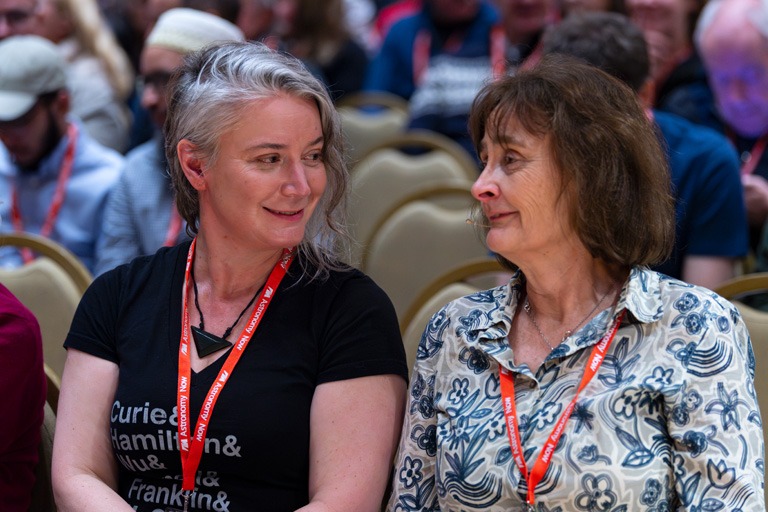
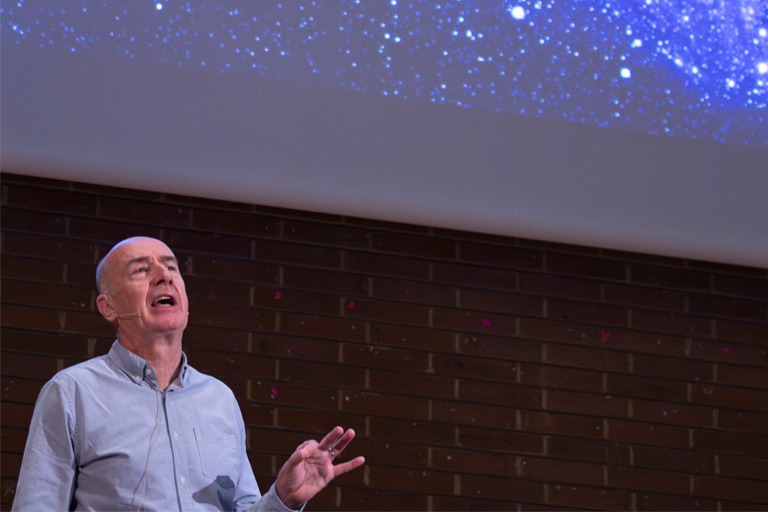
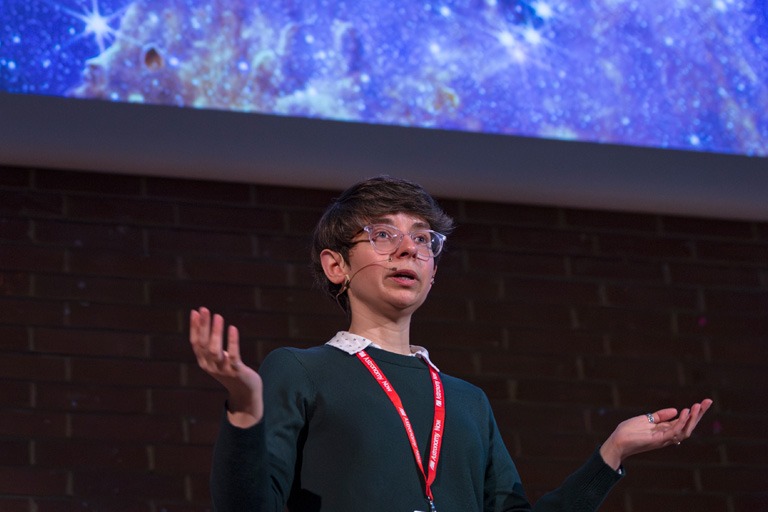
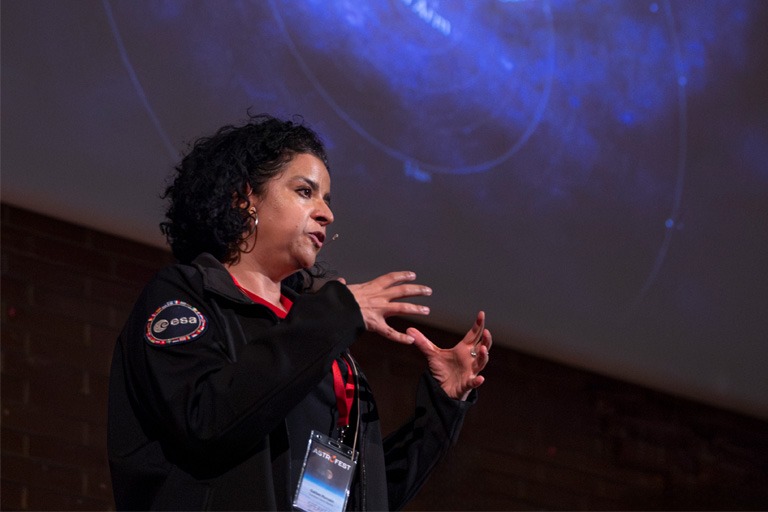
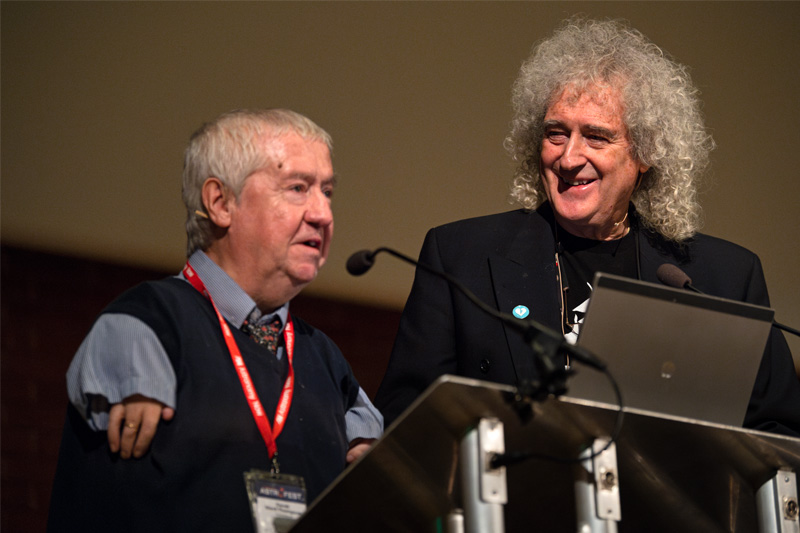
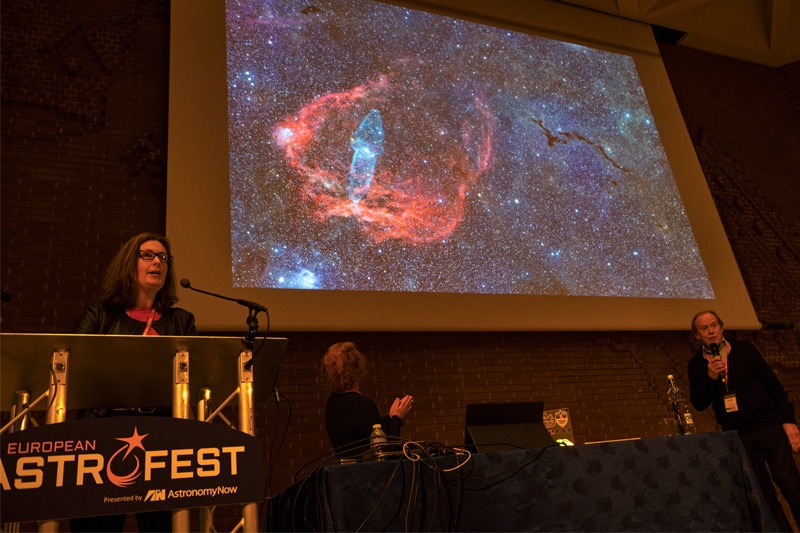
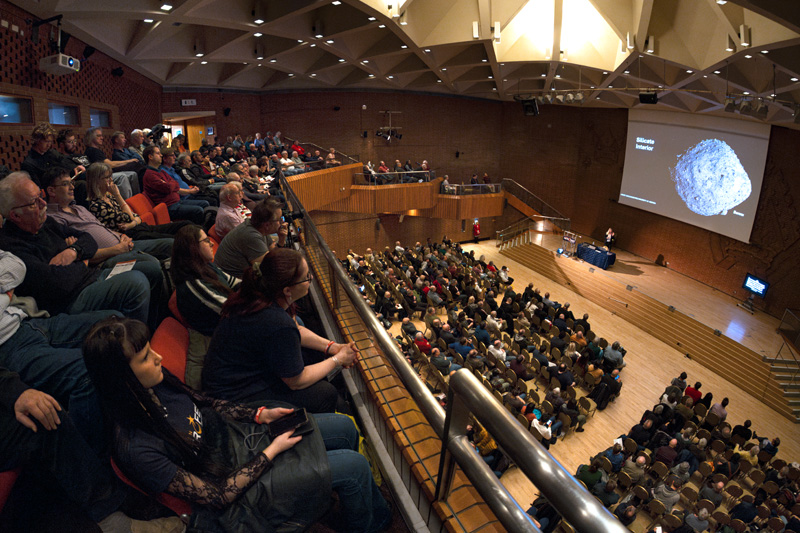
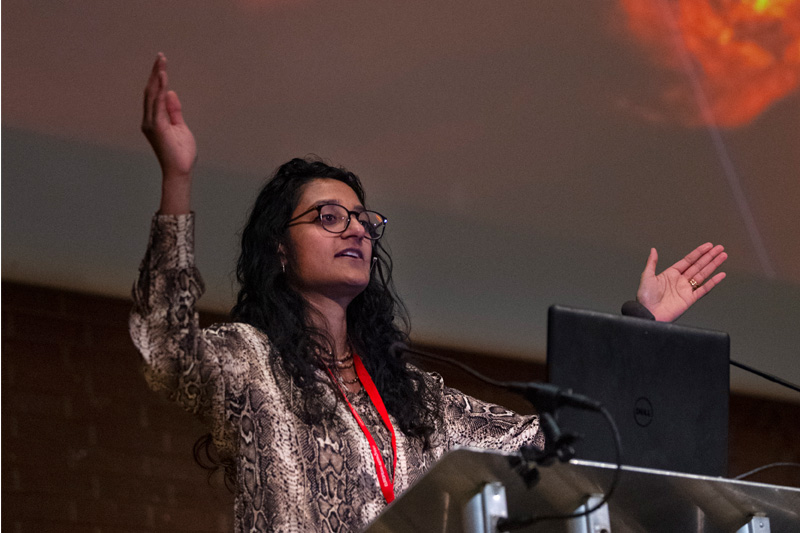
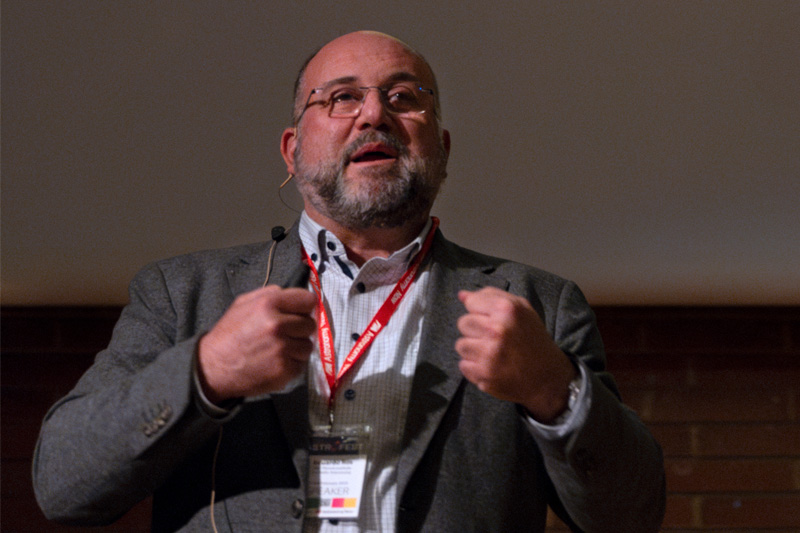
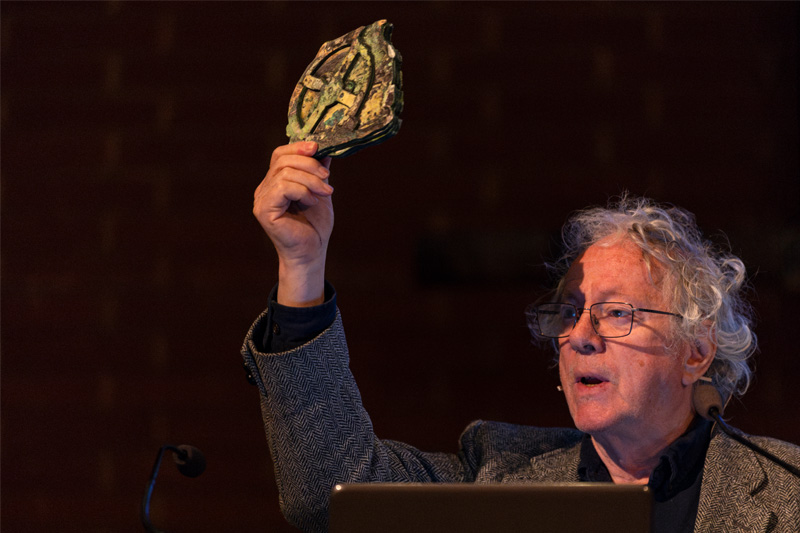
Highlights from a previous event, held in February 2026.
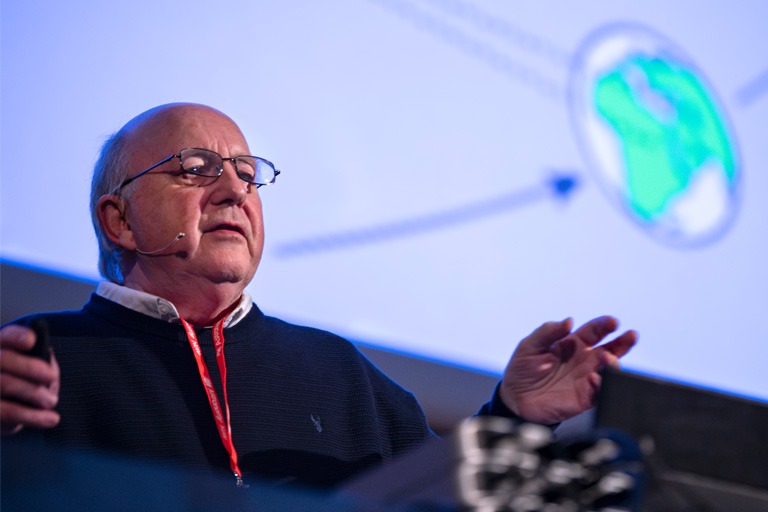
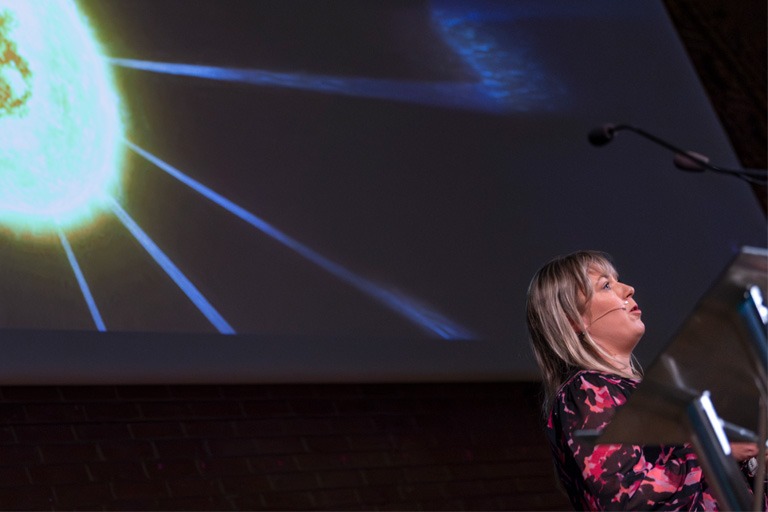
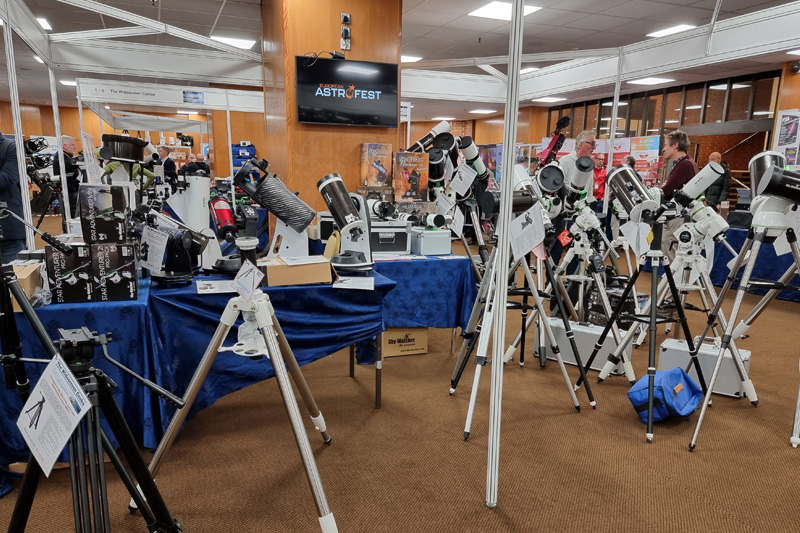
Astronomers filled Kensington Town Hall in early February for the annual AstroFest. They were treated to two day’s of fabulous talks and a three-storey exhibition of telescopes, books and equipment. The conference was chaired by Astronomy Now’s Dr Stuart Clark and UCL’s Prof. Lucie Green.
Each year, on entering the great hall of European AstroFest, two analogies occur to me. The first: is this how Ali Baba felt as he entered the Forty Thieves’ bejewelled cave? The second: perhaps this is the same awe that Howard Carter felt on finally breaking through into Tutankhamen’s tomb? For this is the scale of wonderful anticipation that I and many others feel on entering this veritable palace of astronomical equipment delights.
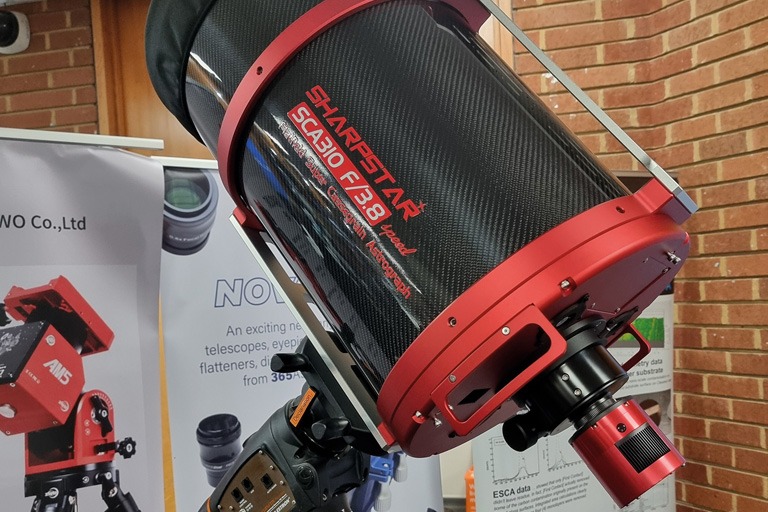
Being an observer (and occasional imager) plagued by the craze of aperture fever, my gaze was at once dragged to a red-trimmed beauty dominating a corner of the room under the 365Astronomy banner. This was the gargantuan Sharpstar SCA310, a fast Cassegrain astrograph boasting an aperture of 310 mm. Its maw was enhanced by the fact that it offers a rich-field focal ratio of just f/3.8, providing the potential for a vast field of view.
But this is no conventional Cassegrain design. A parabolic primary and spherical secondary mirror are accompanied by a 3-inch diameter ED triplet near the focus that ensures the telescope’s epithet as a ‘flat-field astrograph’. This corrector, straddling the converging rays, eradicates field curvature and the aberration known as coma across the whole medium-format (55 mm) imaging field. Despite its payload of glass elements, this beast weighs a reasonable 23.5 kg, by virtue of a carbon-fibre tube that keeps mass to a minimum.
The introduction of carbon-fibre tubes has been a boon to astronomical instrumentation by virtue of them being both lightweight and strong. It is also a material that is visually delightful; its finely etched zig-zag presentation always reminds me strongly of the Widmanstätten pattern revealed by polishing nickel–iron meteorites. A British telescope manufacturer quick to seize on the qualities of carbon fibre is Orion Optics UK, some of whose products were temptingly placed next to the entrance to the conference hall.
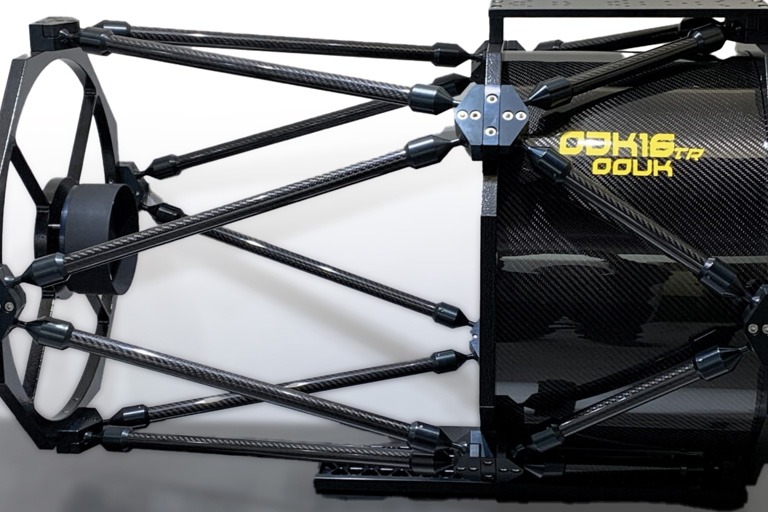
Presenting the vanguard of their exciting new range, Orion Optics were displaying samples of their Truss Optimised Dall–Kirkhams (ODKTr). These are mean machines that really look as though they mean business. Carefully engineered to counter any possibility of tube flexure, these rich-field imaging telescopes will soon be added to the Orion Optics catalogue in apertures beginning at 10-inches and rising to a staggering 24-inches.
The telescopes feature a fully corrected flat-field lens group, the precision Ceres focuser and incorporate carbon shrouds sprayed with their special formula of dead matt black paint that shields the optics from stray light.
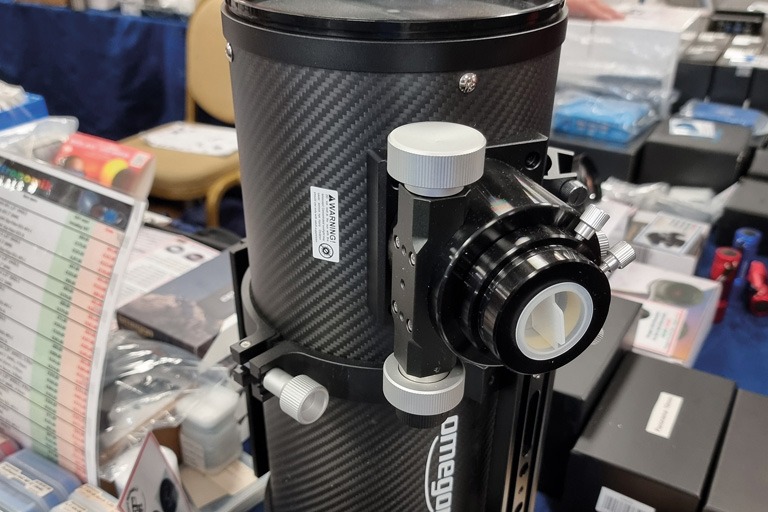
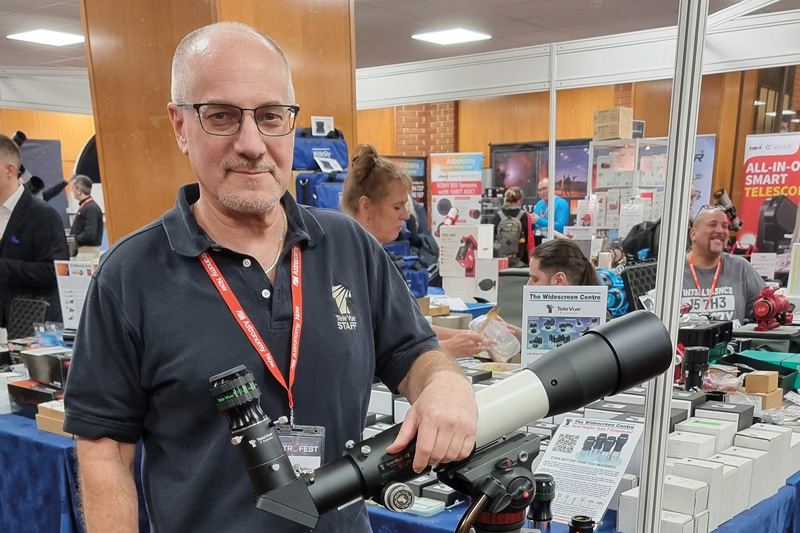
Another telescope wearing the same sexy livery is found on the Widescreen Centre stand. Omegon’s Telescope Pro Astrograph Carbon 150/500, as its name suggests, is a very fast Newtonian astrograph. It has an aperture of 150 mm, with a focal length translating into a rich-field focal ratio of just f/3.33. The visibly chunky 2-inch rack-and-pinion focuser employs linear bearings strong enough to handle the heaviest accessories, which can be connected via its M56 threaded adapter. Again, the lightweight advantage of its carbon-fibre tube keeps the weight to a very portable 5.15 kg – even including the CNC-machined Losmandy-style prism rail.
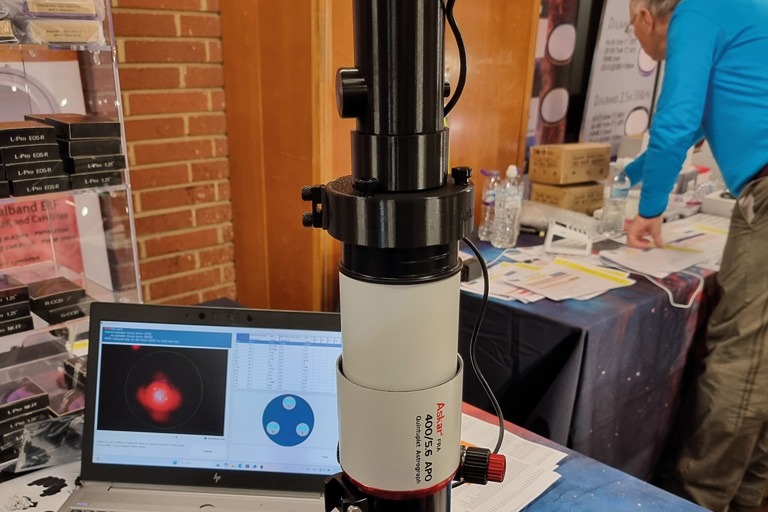
One of the many benefits of AstroFest is that it offers a forum for new ideas and innovation, exemplified by the demonstration of a new product by Astroprecision. Addressing the need for a telescope’s imaging plane to be perfectly plane-parallel to incident light to avoid distortion, the company has designed a rig called the TiltAdjuster. It can be used to achieve this to an extremely high degree of accuracy, eradicating imbalanced stellar images across an imaging field.
A laser is reflected from a camera’s sensor and its image fed into Astroprecision’s software. Minute adjustments of the TiltAdjuster produce changes in the resulting image that are analysed to guide the user towards perfect calibration within a few microns. I stood entranced as the system was demonstrated to me. From a display showing an undesirable sensor tilt, a short and fascinating procedure corrected the fault with little trouble. The system is expanding its application depending on the user’s fittings, and the company currently offers a range of adapters to suit most requirements.
And speaking of innovations, here is a new product that can rescue your telescope and accessory boxes from the insidious invasion of damp air. There is, as we know, more of it about these days, and it seems to find its way into every bag, accessory enclosure and telescope case where it is least desirable. Up to now there has been recourse only to filling cavities with cumbersome parcels of silica-gel crystals.
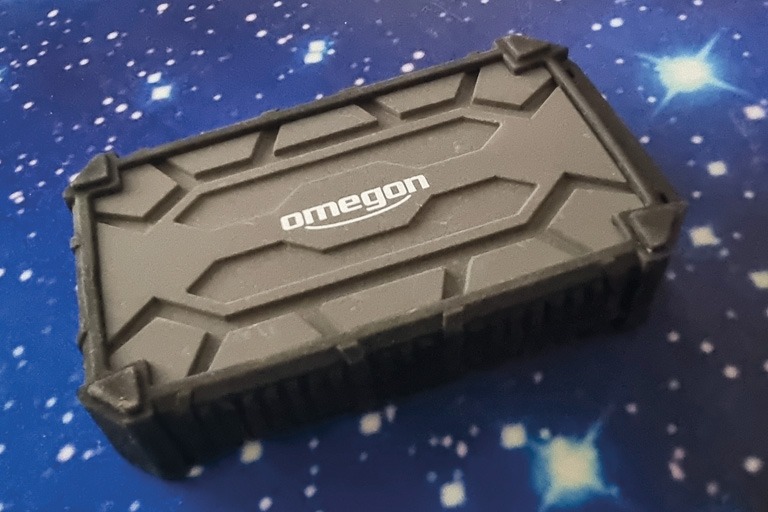
Omegon to the rescue. Enter the Dunedry dehumidifier. It is a neatly engineered pack of nanoporous silicon. A very high-capacity moisture absorber, it has a colour-coded indicator to tell you when it needs drying out (recharging), which can be achieved by a session in either a conventional or microwave oven. The absorption capacity is an astonishing 36 g (±10 per cent), so it continues drinking in the enemy even over extended periods of equipment storage. And yes, I will admit it – I snapped one up.
One of the strongest themes I see developing in amateur astronomy is accessibility. The mantra of yesteryear (and still valid, to some extent) was that novices should begin observational astronomy through the use of relatively inexpensive binoculars rather than jumping straight in with the risky expenditure and commitment of a telescope.
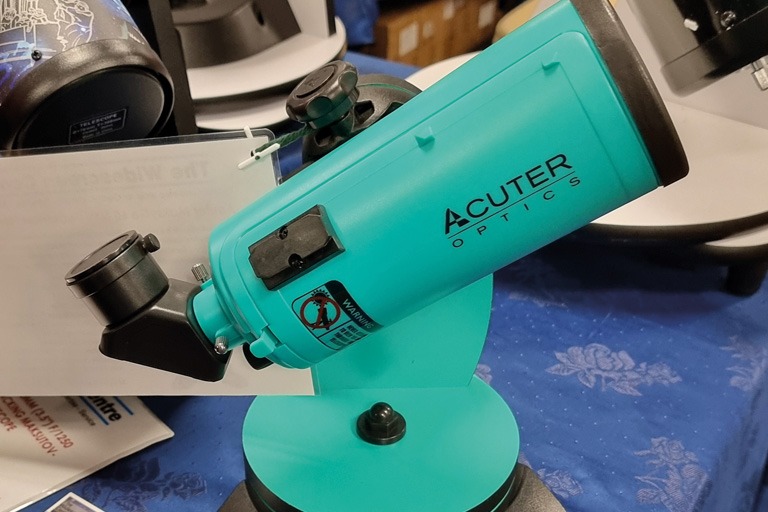
Yet small, intuitive, inexpensive (and more importantly, usable) instruments are now available at almost throwaway price points. Acuter Optics are a relatively new source of astronomical equipment, sitting under the umbrella of the Sky-Watcher empire. Its mantra is to provide adequate performance at affordable prices. Sitting impishly on the Widescreen Centre’s Sky-Watcher tables was the Acuter MaksyGo 60 Mini Dobsonian telescope. Although basic, it was probably the cutest little green telescope at the show.
This is unashamedly a starter telescope for those freshly bitten by the desire to explore the sky. Boasting a 60 mm aperture f/12.5 Maksutov–Cassegrain optical system, it rides on an intuitive alt-az mount that can be table-mounted. It is easily manhandled since the assembly weighs just 1.8 kg. The kit retails for less than £100 and, astonishingly, includes two eyepieces (75× and 37.5×), an erect-image diagonal (also for terrestrial viewing) and a 6×21 mm finder. There is also a mobile-phone holder for imaging, which should suffice for short-exposure lunar photography.
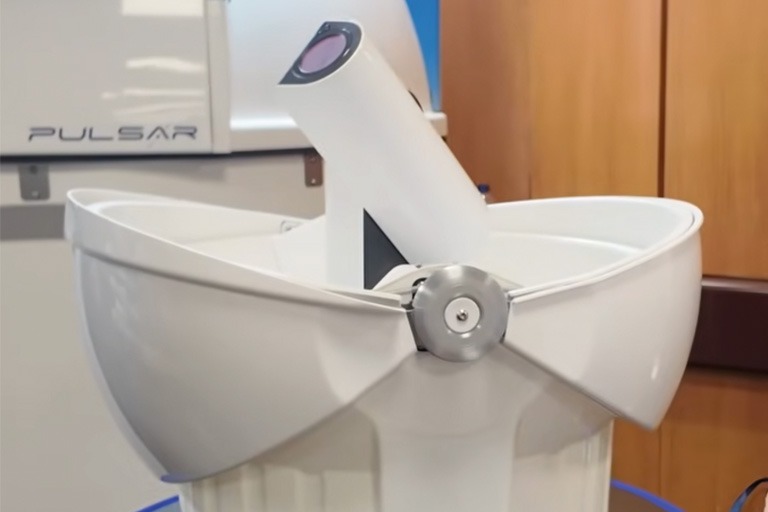
But for me, the star of the show was a product that really knocked my socks off. I waxed lyrical last year about the invasion of the smart scopes – a conquest of the small-arms end of astronomical instrumentation consisting of diminutive, robotised telescopes with remarkable imaging abilities. In a striking innovation from Pulsar, these plucky little devices can now have their own dedicated observatory, called the Mini Imaging Pod.
Designed by Gary Walker, this fully functional ‘micro’ observatory is just 600 mm in diameter and 640 mm high. It comes with a set of features that include ASCOM remote control, rain and temperature sensors, and even an automatic dome-closure mechanism should its primary power supply fail. It fields a unique mini-pier system that can accept the installation of all smart telescopes. The first Mini Imaging Pods should be available in the summer.
Enticingly, Gary says there are already designs on the drawing board for larger sizes of approximately 1,000 mm and 1,600 mm diameter. I have to say that watching it open and close reminded me of the space pods in Kubrick’s 2001: A Space Odyssey. A truly remarkable device to meet the demands of the burgeoning population of smart-telescope users.
Finally, I cannot finish without expressing my thanks to the vendors who make this such an enjoyable event. They work hard erecting stands before we arrive and are still dismantling when the rest of us are already talking about our new purchases down the pub. I am already looking forward to next year’s show.
Steve Ringwood is Astronomy Now’s Equipment Editor.
Highlights from a previous event, held in February 2025.
In February 2025, European AstroFest, the annual celebration of astronomy and space science, brought together leading experts, inspiring presentations, and fascinating exhibitions, offering a unique opportunity to engage with the wonders of the Universe.
In 2025, the programme once again spanned the entire length and breadth of this miraculous Universe. From the extraordinary insights into black holes that radio astronomy is offering us, to the best ways to capture images of the planets from your back garden and everything in between, our guest speakers revealed groundbreaking advancements, key observing techniques, and a look forward to the year ahead.
We were thrilled to be joined by representatives from major UK astronomy institutions: the Royal Astronomical Society, the National Space Centre and the UK Space Agency, as well as from the top universities.
Like Christmas and birthdays, European AstroFest comes around just once a year, but it always feels like both rolled together. It is a chance to catch up on the latest science and meet old friends, as enthusiasts from far and wide come together at this astronomical nexus, but what keeps us starry-eyed as we enter the exhibition hall is the serried ranks of luscious optical goodies waiting to be assessed and carried off.
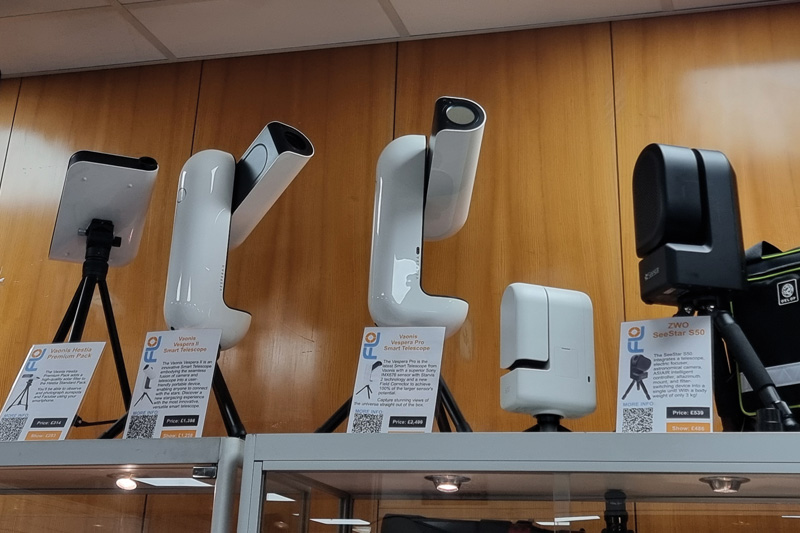
Last year saw a firm showing of those new kids on the block, smart telescopes. This year, their technological invasion was even more evident, with the latest examples from Vaonis, ZWO, DwarfLab, Unistellar and Celestron taking pride of place on a number of stands. They utilise the latest sensor and plate-solving technology to provide access to even the most secretive objects in the sky, plumbing the depths of space with astonishing ease – and they do so almost magically with minimal aperture, although Unistellar and Celestron are clearly working on inching up the apertures.
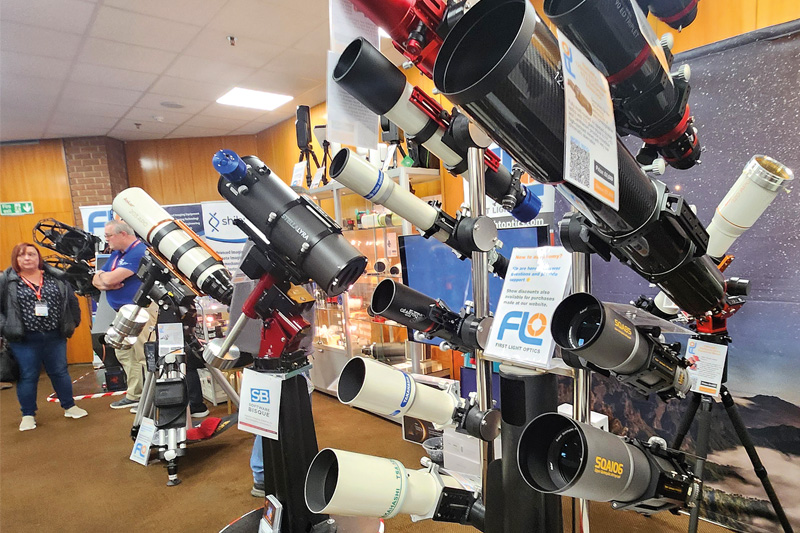
But as Star Trek’s engineer Scotty often said, “Ye cannae beat the laws of physics,” and while smart telescopes can remarkably drink in every photon that meets their gaze, the resolution of fine detail ultimately demands determination by the breadth of the receiving optics. It was interesting therefore to see what appears to be a fight-back by more conventional refractors, exemplified perhaps most starkly by the ‘totem pole’ of mean-looking beasts at the First Light Optics’ (FLO) stand.
With their mutual eyes riveted on some unseen target through the roof of the main hall, this was an impressive array displaying examples from SharpStar (Askar), William Optics, Takahashi, StellaMira, Starfield Optics and Tele Vue.
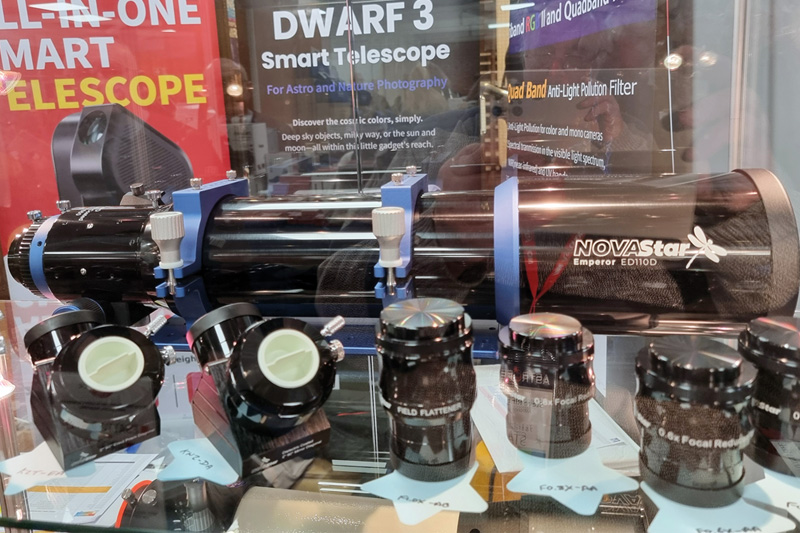
Quietly waiting for attention on the 365Astronomy stand was a sleek, black beast emblazoned with NOVAStar branding, an ED refractor called the Emperor ED110D. This 110mm apochromat is one of three in this new range of instruments – in fact, so new that details are still coming in. I will keep mouths watering by simply saying, more of anon.
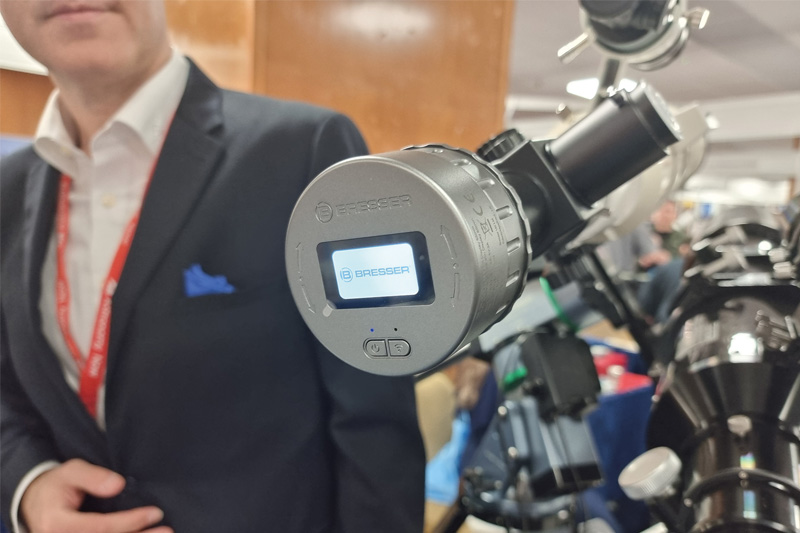
Looking at the Universe is one thing, but imaging is increasingly seizing more territory for itself. The technology is certainly becoming ever more sophisticated and accessible – although the cost can become enhanced too. So, it was great to come across a solution that is, in common parlance, cheap and cheerful: The Widescreen Centre’s stand was offering Bresser’s Wi-Fi eyepiece camera. For significantly less than £100, this is a 4MP 2K video camera that simply clamps onto any eyepiece with a collar diameter of between 30 and 65mm for afocal photography. It will hardly affect your instrument’s balance, for it weighs just 120 grams. Not only does it show what is on view to an integrated 3.7cm display, but it can also store the results from its 1,920 × 1,080-pixel sensor to an onboard MicroSD card. Imaging control and data download is via communication with your smart device. Even if you are a seasoned visual observer, this is a great way to step into the imaging shallows, regardless of the direction you head in afterwards. The eyepiece camera is also ideal for outreach at public observing sessions.
Following a press embargo regarding their latest development, Tele Vue chose European AstroFest to reveal their exciting new eyepiece, the Nagler type 7. This new design retains the 82-degree apparent field of view of its earlier siblings, but offers a generous eye-lens diameter and, more importantly, a liberal 19mm of eye relief that ensures spectacle wearers can now enjoy the famous Nagler quality.
The type 7’s origins are founded in the well-regarded 85-degree, limited edition Apollo 11 eyepiece that was released in 2019. The design of that predecessor has been taken forward to produce four focal lengths that equal or exceed the quality of that commemorative ocular. As an additional treat, it was a pleasure to welcome back David Nagler, who was present to extoll the new eyepiece’s virtues.
It is remarkable to ponder that the original, revolutionary Nagler (now called the type 1) was released in 1982 – and that the range is still addressing the needs of astronomers 43 years later. It has a lineage that goes all the way back to the Apollo era, when the company’s founder, Al Nagler, produced wide-field optical simulators for NASA.
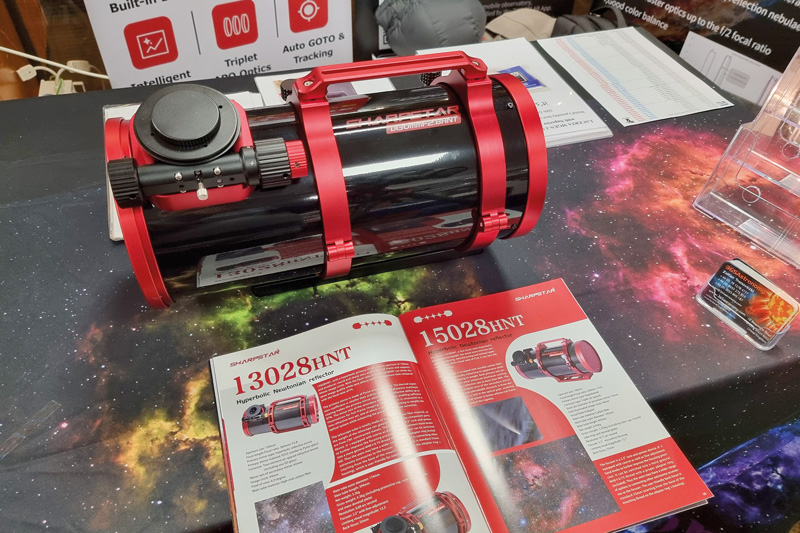
While the small-aperture robotic telescopes are basking in the limelight, rich-field telescopes of larger apertures are still packing a punch with their greater appetite for interstellar photons. On the stand of 365Astronomy was a neat and powerful imaging telescope, SharpStar’s 130mm Newtonian telescope with an astonishingly foreshortened focal ratio of just f/2.8. Termed a hyperbolic Newtonian telescope (HNT), this incredibly compact system resembles a Newtonian design but has an additional correction element (in this case a doublet with an ED component) near the focal plane. As the name suggests, the primary mirror features a hyperbolic curve (as opposed to the more conventional parabolic or spherical), which in partnership with the corrector lens delivers an imaging circle of 44mm that grabs a celestial field of view of nearly seven degrees. To give you an idea of the width of that gaze, it is just shy of the distance between Orion’s Betelgeuse and Bellatrix! That’s a lot of sky.
This is a powerful yet portable system, for even when fully clothed with its protective cap, tube rings, handle and Vixen dovetail plate, it weighs in at only 4.3-kilograms (assisted by a super-strong but lightweight carbon-fibre tube). For those tempted by a greater light-grasp at the expense of a smidgeon less view of the sky, this telescope has a big brother, the 15028HNT.
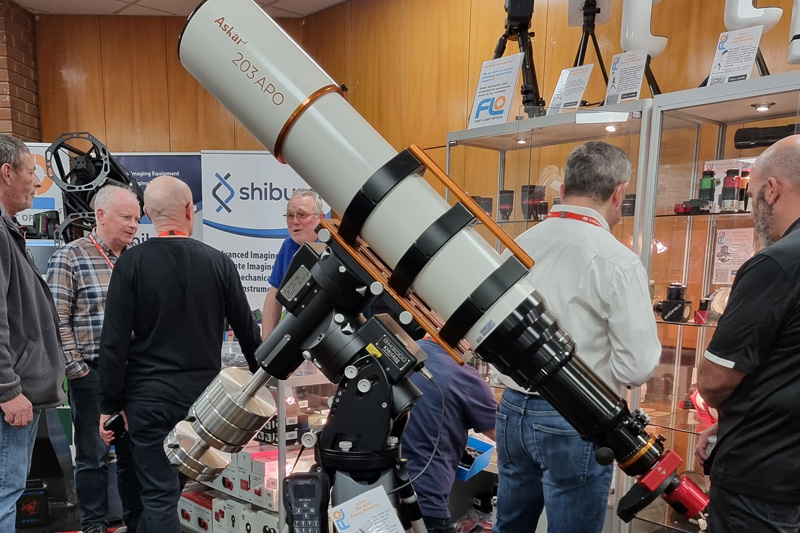
For me personally, the star of the show (forgiving the pun) striding out in front of the FLO stand without a shred of coyness, was the monstrous Askar 203mm triplet apochromat. Standing aloft on a stout 10Micron GM2000 HPS II Combi German equatorial mount, it looked as though its stare could melt through the walls around it to reach any target it wished for. With a native focal ratio of f/7, its focal length of 1,421mm makes it a real planet killer – but deep-sky objects are also on its to-do list, with a forthcoming release of a customised flattener-reducer.
Despite an impressive focal length, the telescope remains portable. The focuser interface is built into a nested retractable tube. This not only makes back-focus easily attainable for accessories such as binoviewers and imaging trains, but with the dew tube retracted, it enables the optical tube assembly to collapse down to just 1,145mm for storage or travel.
All of the above is a reminder, if one was needed, that research and development of the astronomical equipment available to amateur astronomers never rests. Advances in optics and (especially) sensor processing means that each year at European AstroFest there are amazing surprises. Already I can’t wait for 2026.
Steve Ringwood is a regular contributor to Astronomy Now.
One of the major highlights from each and every European AstroFest is its conference of top speakers, and 2024’s event was no different.
Thousands of astronomers descended upon the Kensington Conference and Events Centre in the heart of London over the 2 and 3 February for the biggest astronomy show in the country, European AstroFest 2024. With three floors of exhibitors and a packed talk schedule in the conference hall, there was plenty to keep everyone happy, from the newcomer to the subject to the veteran observer.
Highlights from the conference included Beatriz Villarroel of the Nordic Institute for Theoretical Physics at Stockholm University in Sweden discussing the bizarre case of the vanishing stars that have been discovered by the VASCO (Vanishing and Appearing Objects during a Century of Observations) project, and which we described more about in the March issue of Astronomy Now. Meanwhile, Carole Mundell of the European Space Agency and Cathie Clarke of the University of Cambridge gave a special panel session entitled ‘The Sky is For Everyone’, wherein they discussed the obstacles they have faced in their careers as women in science, and to hopefully empower women and girls to take up their own scientific careers. There was also a really cool talk from Andrew Thornett about how to build your own cosmic-ray detector to conduct real astrophysics and particle science from your own home, and perhaps even pick up cosmic rays from a supernova! And for those not so handy with electronics, there were some detectors already assembled and on sale in the exhibition hall.
European AstroFest always feels to me like Christmas and a birthday rolled into one; for in the first week of February, the Saturnalian festivities are not a too distant memory and, as it happens, the anniversary of my birth always falls within a day or so of this, the best weekend of the year. In short, the sights and sounds (and possibly the smells!) of this annual event are a cross between eagerly revisiting an old friend and an entry into an astronomical heaven. What follows are my own personal delights of the exhibition that I alighted on during the two days spent in London at AstroFest.
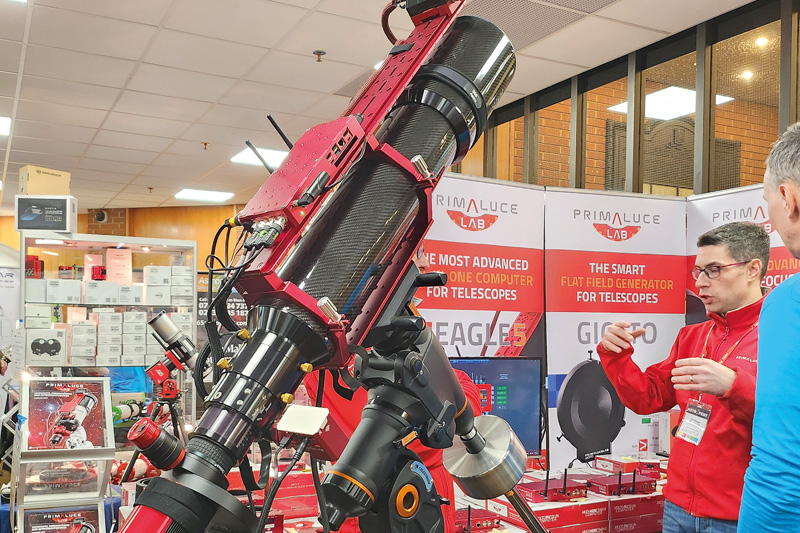
Immediately on entering the main hall, visitors were greeted by an EQ8R equatorial mount upon which was mounted a 127mm, f/7.5 ED Explore Scientific refractor. Although a magnificent observing instrument in its own right, for this occasion it was dressed by the Primaluce Lab team with a colony of imaging accessories.
Fixed to the focuser was a Sesto Senso 2, which is a robotic focusing device that allows the user to impart minute drawtube movement with 0.7-micron precision. Clustered around the instrument’s focus, behind a large filter-wheel and off-axis guider, were an ASI174 guiding camera and a ZWO ASI2600MM imaging device. At the other end, completing this supporting cast of photographic players, a Giotto 220 flat-field generator rode high on the dew-tube.
Yet despite the deployment of all of this imaging paraphernalia there was no tangled web of wires flowing away from the mount like maypole ribbons, for all of these accessories were connected by a thread-like nervous system to a Primaluce Lab Eagle Pro computer, perched on the rings midway along the tube. With your preferred Windows software on board, this powerful Enterprise computer mediates between connected devices and the user’s smart device or computer via Wi-Fi, thus avoiding a hazardous melange of trailing cables flying off into the darkness towards the user’s distant laptop. It was an impressive demonstration of how a multitasking set-up can be neat, completely self-contained and safe.
Once past this fascinating obelisk, pressing farther into the main hall was a bit like encountering an optical Tunguska Event; not a massive radial pattern of fallen trees and twigs, but a chaotic multi-colour explosion of telescope tubes and tripods. You could not help at once feeling that you’d like to take all of them home.
Together with great examples of conventional telescopes, the significant growth in the popularity of portable yet able apochromatic refractors was very noticeable this year – and some of these pack a real punch.
On the 365Astronomy stand, it was (almost) possible to walk by Askar’s mighty 185mm aperture apochromat, so compact is its design. Even at f/7 (which is uncharacteristically long for an apochromat these days) the stored tube has a length of just 1,081mm and weighs less than 15 kilograms. It had all the features that you now expect from a high-end refractor, such as an integrated mounting cradle, 360-degree rotating and lockable dual-speed focuser, indexed drawtube and, of course, at the business end that all important apochromatic (colour-free) triplet objective. For imagers, there are the optional extras of a 1.0× flattener and a 0.8× reducer that brings the telescope down to a richer field f/5.6.
I am already beginning to wonder what compact yet gargantuan refractor apertures are going to be available off-the-shelf at next year’s AstroFest!
I can still recall the shock and horror of observational die-hards when Go-To telescope mounts first began to appear. Preferring to stay loyal to manual analogue-means of finding their way around the sky, they urged the continuing virtue of trepidatiously steering their mounts by using little pointers moving against collars or discs inscribed with minute divisions of Right Ascension and Declination. From the onslaught of Go-Tos, knowledge of the sky will diminish, they feared. That fear, of course, was unfounded. Go-To telescopes have proved a boon in opening up a greater access to the sky and a better knowledge of it.
Such undue caution is a lesson going forward, for we are currently witnessing another revolution in access to the sky brought about by new technology, that of portable, fully automated (imaging) telescopes that integrate with mobile devices – so-called ‘smart telescopes’. Those by Unistellar and (the almost pocket-sized!) dual-lensed Dwarf II were much in evidence, scattered about the main hall like eager telescopic puppies. But I was rather taken by ZWO’s SeeStar S50, which is an all-in-one smart apochromatic telescope.
It is beautifully compact with a body weight of just three kilograms. Within its streamlined body, the 50mm, f/5 triplet apochromat is supported by impressive integrated technology, including an electric focuser, a filter-switching device and an intelligent controller – all accessible via a mobile device app through either Bluetooth or Wi-Fi. There are even on-board sensors to assist in getting the tripod level!
Using the GPS sensors on your mobile device, the S50 discovers where it is and sets itself up without any intervention by the user – except perhaps the eager digit that presses the power button. After that, the sky is literally the limit. The software’s catalogue of celestial objects is there to choose from, or the user can be tempted by its suggestions of the night’s best objects. Once its Go-To system has homed in on the target, the image captured by the Seestar’s 1,920 × 1,080 IMX462 sensor is transmitted to your device for observation or (single or stacked) capture.
This new generation of telescope is giving many old hands pause for thought, besides providing an entry point into astronomy for perhaps an entirely new audience.
I have noticed over the years that each AstroFest is often characterised by a purchasing frenzy of one product or another – and this year these digital delights seemed to be flying off the stands.
In the April 2008 issue of Astronomy Now, my monthly column featured a build-your-own-Solar System kit, specifically a brass orrery available from publishers Eaglemoss that was gradually assembled week-by-week through the purchase of their magazine. Although the original designer visited me at my home to demonstrate his wonderful creation and afforded me with the first few issues to get me going, I unfortunately never got around to completing the entire kit – mainly because I was too impatient to acquire all of the instalments and my keenness to keep up the weekly purchase faded.
Which is why I was so pleased to see this amazing construction on display on the stand of Box of Tricks Collections Ltd, who are offering complete kits of this magnificent brass orrery. You still have the fun of construction, but without the piecemeal wait! Orreries are exquisite machines, for not only are they amazing celestial timepieces of great beauty, but they also embody an engineering exactness that is a thing to marvel at. Set in motion, it is almost hypnotic to watch. There is a challenge too, for as you watch fleet-footed Mercury whirl around the brass orb of the model’s central Sun, can you detect the painfully slow motion of far-flung Neptune or Uranus?
The kit comes with a start-to-finish construction guide and is available at buildthesolarsystem.com.
Possibly the most interesting ‘gadgets’ in this year’s exhibition were ironically probably the smallest. Quietly being demonstrated by the Radio Astronomy Section of the British Astronomical Association were innocent-looking little metal boxes blithely detecting a fundamental consequence of relativity, muons.
Muons are created by the impact of high-energy astrophysical particles (cosmic rays) upon the upper atmosphere. Their collisions produce a shower of particles that subsequently decay into muons. Muons should not actually reach the Earth’s surface before they too decay, but do so by virtue of their relativistic speed extending their intrinsic ‘lifetime clock’ through the process of time dilation. So, innocently flickering a light upon each detection of a muon, these little boxes were betraying the arrival high above South Kensington of cosmic rays – which may have come from a very great distance indeed.
I was fascinated to learn that these detectors (designed by the UK Radio Astronomy Association, or UKRAA) had been confirmed as having picked up the arrival of cosmic particles from a supernova erupting in another galaxy. I think it is simply mind-boggling to have a device no bigger than a large cappuccino sitting on a tabletop, betraying the existence of both relativity and the biggest bangs in the Universe.
Just as amazingly, these devices are available both as kits and complete assemblies from ukraa.com.
I have been attending European AstroFest for more years than I care to remember, but there has always been one itch I have never got around to scratching – and that is demonstrating my expertise (trying my luck!) on the ISS docking simulator at the British Interplanetary Society stand. In the past, whenever I have strolled by, there has always been a queue, or a frantic ‘pilot’ determined to complete the task no matter how many attempts it took, or an enthusiastic celebrity (such as Brian May) already installed and shielded from interruption by large protective individuals.
Quite by chance my wife, Gillian, and I were passing the simulator late on the Saturday afternoon when the crowd had thinned and, with only a single ‘victim’ ahead of us, we loitered sufficiently long to be offered our opportunity. My wife took the hot seat first, listening carefully to the instructions of her Soyuz simulator instructor. The task, as many AstroFest attendees will know, is to carefully control a Soyuz spacecraft towards a successful docking with the International Space Station (ISS), using a carefully constructed simulation of the actual controls and docking-camera view, designed by the Italian branch of the BIS.
Gradually, using gentle spurts from the attitude control thrusters, my wife inched the Soyuz spacecraft towards the target docking collar on the ISS. I have to say that although this was a simulation, the tension was no less palpable. Simply watching the slowly expanding view of the ISS relayed by the ‘external’ camera of the Soyuz, the process was truly exciting – and I’m happy to report, successful.
Then, after many years of waiting, I also took the pilot’s seat. Even though I had taken in the instructions given to my wife and watched carefully as she successfully docked, I felt an anxiety of not only keeping my crew members safe, but knowing I would never hear the last of it should I fail! Fortunately, I too succeeded – although of course, inside my space, they couldn’t hear me screaming!
I would recommend to anyone who goes to AstroFest in the future to have a go. Simulator it may be, yet in all seriousness it does give you a feel for quite how hard it can be to manoeuvre in space during what can be a very dangerous but necessary task.
I’ll be back for another go, next year.
Steve Ringwood is a regular contributor to Astronomy Now.
Facing off against stiff competition, the three winners – Harry Page, Alessandro Ravagnin and Lili Viktoria Haluska – were revealed by our competition judges on the stage in the Great Hall at European AstroFest. With eight shortlisted images selected from a wealth of entries, the judges – Astronomy Now’s Mark Armstrong and Mandy Bailey, photographer Max Alexander and astro-imager Nik Szymanek – were given the tough responsibility of choosing the ultimate winners in each category.
Harry Page, who won the deep-sky category, received a Celestron NexStar Evolution 8 SCT. Alessandro Ravagnin, who triumphed with his image of a partial solar eclipse, won a Celestron NexStar 8SE SCT, while Lili Viktoria Haluska, who came first in the under-18 category, received a Celestron StarSense DX5 telescope and NexImage 10 Solar System colour CCD. Congratulations to all the winners, and many thanks to Celestron for providing the prizes and to our judges for devoting their time to carefully select the winners.
Just complete the form below to be added to our mailing list. Don’t worry, we never share your information.